
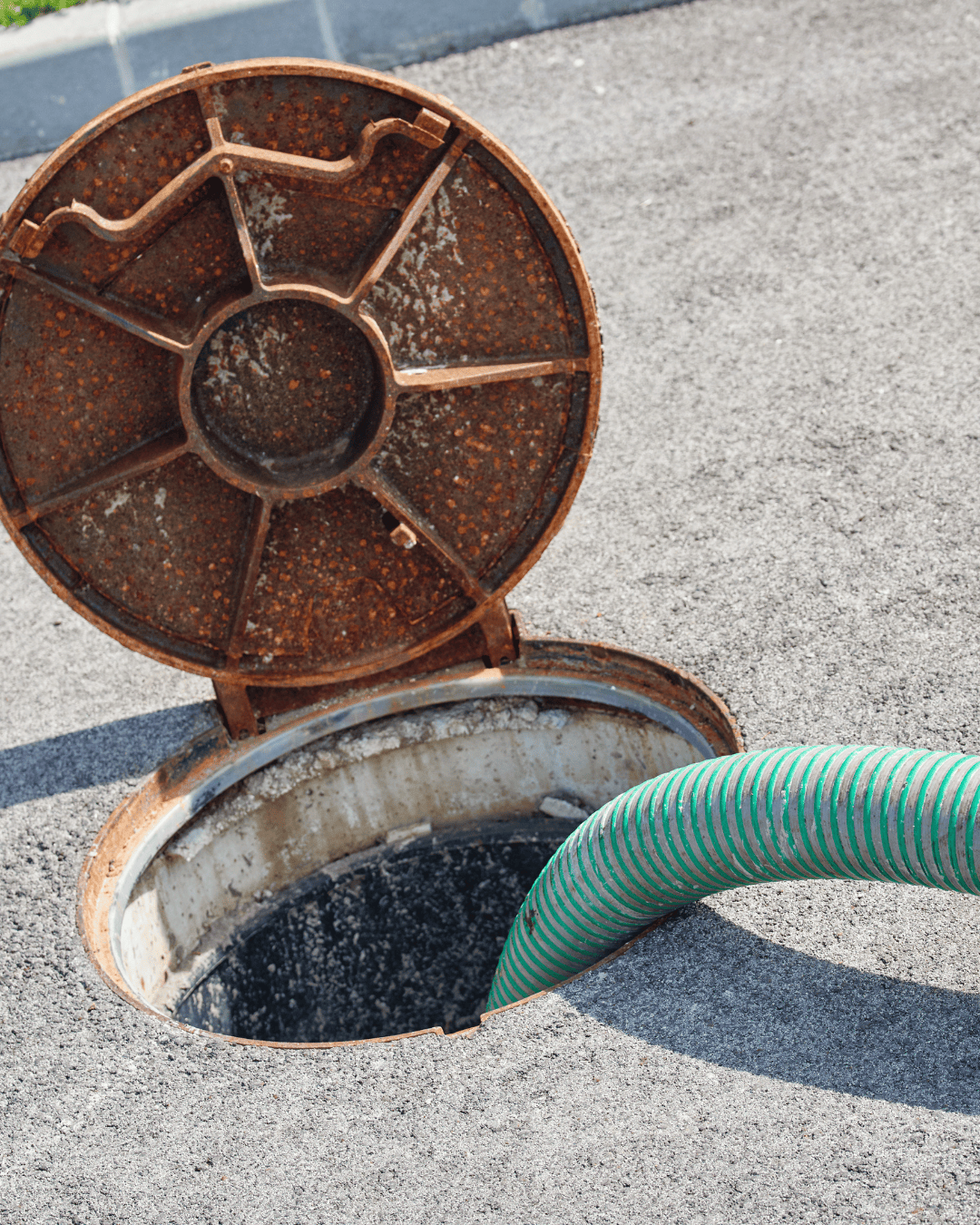
Most people don't think about their main sewer line until it stops cooperating. It's buried, out of sight, and quietly doing its job until the day it isn't. The tricky part is that a main line clog rarely shows up as one obvious problem. It arrives as a handful of small, seemingly unrelated annoyances that are easy to brush off, right up until the moment sewage is backing up into a basement floor drain. Learn to spot that early pattern and you can catch the problem while it's still a cleaning job instead of a cleanup job.
What a Main Sewer Line Clog Actually Is
Every drain in your house feeds into a branch line, and all those branch lines eventually join one pipe: the main sewer line that carries everything out to the city sewer. When a branch line clogs, one fixture acts up. A bathroom sink drains slow, or a single toilet won't clear. When the main line clogs, everything upstream of the blockage has nowhere to go. That's why the symptoms feel scattered and unrelated. They're not. They're all pointing at the same pipe.
The Signs Most People Read as Separate Problems
A main line clog tends to make several fixtures misbehave around the same time, and the lowest drains in the house usually complain first. Here's the pattern worth watching for:
- More than one drain running slow or backing up within the same few days
- The lowest fixtures going first, like a basement floor drain or a first-floor tub
- A toilet that gurgles or bubbles when you run the washing machine or a nearby sink
- Water rising in the shower or tub when you flush the toilet
- A faint sewage odor near a floor drain or around the cleanout outside
- The floor drain overflowing when the washer drains a load
The thread tying all of this together is that your fixtures have started talking to each other. When running one appliance causes trouble somewhere else in the house, that's the main line telling you it can't keep up with the flow.
Why Boulder Homes Run Into This More Than You'd Expect
A lot of Boulder's housing stock has been around for decades, and so have the sewer lines under it. Older clay and cast iron laterals crack and shift over time, especially with the ground movement our freeze-thaw winters cause. Mature trees do their part too, sending roots toward the moisture at any loose joint. Add years of grease and mineral scale slowly narrowing the pipe, and an older line ends up with several weak points working against it at once. Newer homes aren't immune, but the older the line, the more of these factors tend to stack up.
What's Actually Blocking the Line
A clog is usually the visible symptom of something that's been building for a while. On main lines, a few culprits show up again and again.
Grease and soap scale top the list. Warm water carries it down easily, then it cools, hardens along the pipe wall, and starts grabbing everything that passes by. So-called flushable wipes are another common one, along with paper towels and hygiene products that simply don't break down the way toilet paper does. Root intrusion works its way in through old joints. And then there's the pipe itself: a bellied section that has sagged over the years lets waste pool instead of flowing through, and on aging lines you sometimes find pipe that's cracked, heavily scaled, or partly collapsed. Knowing which of these you're dealing with is the difference between clearing a clog and actually fixing the cause.
What to Do the Moment It Backs Up
If water is coming up where it shouldn't, the first move is to stop adding to the problem. Turn off the tap, hold off on laundry, and don't run the dishwasher. Every bit of water you send down has nowhere to drain and will only find its way back up through the lowest fixture.
Resist the urge to keep flushing to push it through, because that just raises the water level. Skip the chemical drain cleaner too. Those products are built for small, local clogs, and against a main line packed with roots or hardened grease they won't reach the blockage. The liquid tends to sit against your pipes and fixtures instead, which helps no one.
If you have an accessible cleanout, usually a capped pipe in the basement, crawl space, or yard, opening it can let backed-up water escape there rather than through a drain inside the house. Fair warning, that's a messy job and a clear sign it's time to bring in a pro. Treat an active sewage backup as urgent. It's a health concern, not just a plumbing inconvenience.
How the Clog Gets Cleared and the Line Checked
Clearing a main line usually starts with mechanical cabling to cut through the blockage, or hydro jetting when grease and scale have coated the pipe walls and need to be scoured off. That gets your water moving again. The part that actually solves the problem is the camera inspection that follows. Running a camera down the line shows what caused the clog and whether the pipe itself is damaged, bellied, or invaded by roots. Clearing the line fixes today. The camera tells you whether it's coming back next month.
Frequently Asked Questions
How quickly can a main sewer line clog turn into a backup?
It varies. Sometimes you get several days of small warning signs to work with. Other times a partial clog tips into a full one during a single evening of heavy use. Those early signs are your window to act before it reaches the backup stage.
Can I use a store-bought drain cleaner to clear my main line?
Not effectively. Those cleaners are made for small, localized clogs like hair or soap in a single drain. They don't clear roots or hardened grease deep in the main line, and the liquid usually pools against your pipes rather than reaching the blockage.
Does a main line clog mean I need to replace my sewer line?
Usually not. Most clogs clear with cabling or jetting. A camera inspection is what tells you whether you've got a simple blockage or an underlying issue like a break or a sagging section that calls for repair.
How often should a main sewer line be cleaned?
It depends on the age of your pipe, any history of root problems, and how much grease goes down your drains. Homes with older lines or repeat clogs often do better on a regular cleaning schedule than waiting for the next surprise.
Does homeowners insurance cover a sewer backup?
That comes down to your specific policy. Sewer backup protection is often a separate add-on rather than part of standard coverage, so it's worth checking your paperwork or asking your provider before you ever need it.
My toilet gurgles when I run the sink. Is that always the main line?
Not always, but it's one of the more telling signs, especially when slow drains elsewhere show up with it. Gurgling means air is being forced back through the system because water can't move freely, and that often points to a restriction downstream in the main line.
Get Ahead of a Main Line Clog with Canyon Plumbing & Heating
If your drains are showing any of the signs above, or you'd simply rather know the condition of your line before winter, Canyon Plumbing & Heating can clear the clog and run a camera to find out what caused it. Catching a main sewer line problem early in Boulder usually means a straightforward cleaning instead of an emergency and a mess to clean up after. Reach out to schedule sewer line service and get your system draining the way it should.