
When it’s time to upgrade your water heater, one of the most common questions homeowners ask is:
Should I choose a traditional tank or go tankless?
Both systems are widely used across Colorado, and each offers unique benefits depending on your home, your usage, and your long-term goals. For homeowners along the Front Range (where cold winters and fluctuating demand are common) choosing the right system can make a noticeable difference in comfort, efficiency, and utility costs.
At Canyon Plumbing & Heating, we help homeowners evaluate both options every day. Below is a practical, no-nonsense guide to help you decide which system makes the most sense for your home.
What Is a Tank Water Heater?
A tank water heater is the traditional system found in many homes. It stores a set amount of hot water (typically between 40 and 80 gallons) in an insulated tank, keeping it heated and ready for use.
How It Works
Water inside the tank is heated using gas or electricity and maintained at a set temperature. When you turn on a tap, hot water is drawn from the tank and replaced with cold water, which is then reheated.
Pros of Tank Water Heaters
- Lower upfront cost compared to tankless systems
- Straightforward installation and replacement
- Reliable performance for smaller households
- Familiar system that most plumbers can service
Cons of Tank Water Heaters
- Limited hot water supply—once the tank is empty, you must wait for it to refill and reheat
- Higher energy consumption due to constant heating
- Larger footprint in basements, closets, or utility areas
Tank systems are often a good fit for homes with lower or predictable hot water demand.
What Is a Tankless Water Heater?
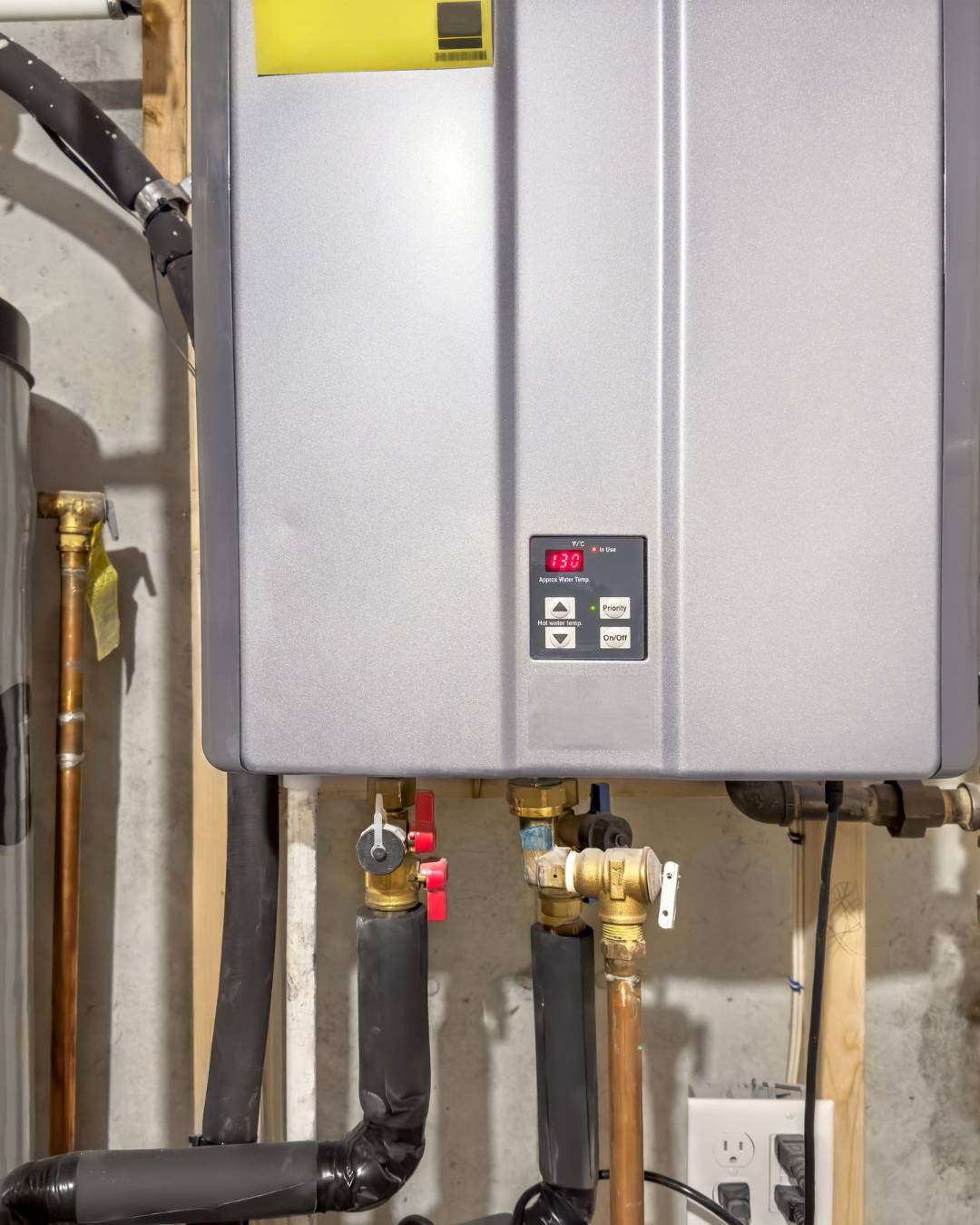
A tankless water heater, also known as an “on-demand” system, heats water only when it’s needed. There is no storage tank. Instead, water flows through a heat exchanger and is heated instantly.
How It Works
When you turn on a faucet or appliance, cold water passes through the unit and is heated in real time using gas burners or electric elements.
Pros of Tankless Water Heaters
- Continuous hot water supply—no running out during showers or heavy use
- Higher energy efficiency compared to traditional tanks
- Compact design that saves space
- Longer lifespan, often 15–20 years with proper maintenance
Cons of Tankless Water Heaters
- Higher upfront installation cost
- May require upgrades to gas lines or electrical systems
- Must be properly sized to meet household demand
Tankless systems are especially appealing for larger households or homes with multiple bathrooms.
Key Differences: Tank vs. Tankless
When comparing these systems, it helps to look at how they perform in real-world conditions.
Hot Water Supply
Tank: Limited by storage capacity
Tankless: Provides hot water on demand
Energy Efficiency
Tank: Continuously heats stored water, even when not in use
Tankless: Heats water only when needed, reducing energy waste
Lifespan
Tank: Typically 8–12 years
Tankless: Often 15–20 years
Space Requirements
Tank: Requires floor space for storage
Tankless: Wall-mounted and compact
What Works Best for Colorado Homes?
Front Range homes have unique needs due to climate, elevation, and seasonal demand.
Cold Winters Increase Demand
In Colorado, incoming water temperatures drop significantly in winter. This increases demand on both systems—but especially on tank models, which may take longer to recover between uses.
Tankless systems can handle this demand more effectively when properly sized, making them a strong option for homes with heavy winter usage.
Household Size Matters
Smaller households (1–2 people): A tank water heater is often sufficient and more budget-friendly
Larger households or multi-bathroom homes: Tankless systems provide consistent hot water across simultaneous uses
Space and Layout Considerations
Homes with limited space such as smaller mechanical rooms or finished basements often benefit from the compact design of tankless systems.
Cost Considerations: Upfront vs. Long-Term Value
Cost is one of the biggest factors in the decision.
Tank Systems
- Lower initial cost
- Easier installation
- Lower barrier to replacement
Tankless Systems
- Higher upfront investment
- Potential energy savings over time
- Longer lifespan reduces replacement frequency
While tankless systems cost more initially, many homeowners see value in reduced energy use and fewer long-term replacements.
Maintenance Requirements for Both Systems
No matter which system you choose, proper maintenance is key to performance and longevity.
Tank Water Heater Maintenance
- Annual flushing to remove sediment
- Inspection of valves and connections
- Monitoring for leaks or corrosion
Tankless Water Heater Maintenance
- Periodic descaling to remove mineral buildup
- Inspection of heat exchanger and components
- Routine system checks to ensure efficiency
Colorado’s mineral-rich water makes maintenance especially important for both system types.
When to Consider Upgrading
If your current water heater is struggling, it may be time to evaluate your options.
Signs it’s time to upgrade:
- Frequent repairs or inconsistent performance
- Running out of hot water regularly
- Rising energy bills
- Unit age over 10–12 years
- Visible corrosion or leaks
Upgrading allows you to choose a system that better matches your current household needs and improves efficiency.
Which Option Is Right for You?
There’s no one-size-fits-all answer. The right choice depends on your priorities:
- Choose a tank system if you want a lower upfront cost and have moderate water usage
- Choose a tankless system if you want long-term efficiency, space savings, and unlimited hot water
A professional evaluation can help determine the best fit based on your home’s size, plumbing setup, and usage patterns.
Work With Canyon Plumbing & Heating
Choosing between tank and tankless isn’t just about the equipment. It’s about proper sizing, installation, and long-term performance.
Canyon Plumbing & Heating provides expert guidance, installation, and service for both systems. Our team helps Front Range homeowners make informed decisions based on real-world usage, not guesswork.
If you’re considering a water heater upgrade, contact Canyon Plumbing & Heating today to schedule a consultation and find the right solution for your home.
Frequently Asked Questions
Is tankless always better than tank water heaters?
Not always. Tankless systems offer efficiency and unlimited hot water, but tank systems can be more cost-effective for smaller households.
Can a tankless water heater handle multiple showers at once?
Yes—if properly sized. A professional assessment ensures the system meets your home’s peak demand.
How long do water heaters last?
Tank water heaters typically last 8–12 years, while tankless systems can last 15–20 years with proper maintenance.
Do tankless systems save money?
They can reduce energy consumption over time, but savings depend on usage and installation costs.
Should I replace my water heater before it fails?
Yes. Replacing proactively helps avoid unexpected breakdowns and allows time to choose the best system.